How we make it.
From fiber to fabric.
The character of a Reda fabric takes shape through a carefully connected sequence of processes. As a vertically integrated wool mill, Reda brings together material knowledge, manufacturing expertise, and precise control throughout production.
From the preparation of Merino wool to the final inspection, each stage contributes to the fabric’s construction, hand, and performance. A continuous attention to detail that gives every quality its distinctive expression.
From wool to yarn.
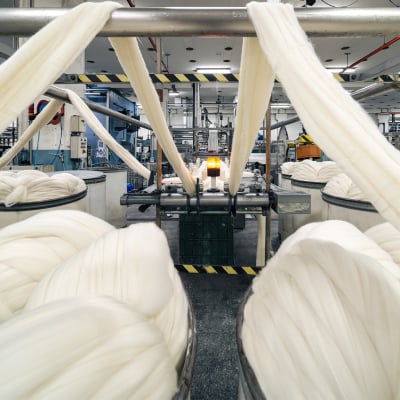
Selected Merino wool is cleaned and combed, aligning the fibers into soft, even slivers. Dyeing introduces color, while preparation blends and progressively refines the material before spinning.
These connected stages establish the conditions for a fine, strong, regular yarn and help define the qualities of the fabric to come.
The first care given to the fiber.
The journey begins with the raw material. Before entering the next stages of production, wool is cleaned and combed to remove impurities and prepare the fibers for processing.
This initial care creates the foundation for the work that follows, allowing the distinctive qualities of Merino wool to emerge throughout its transformation.
Color developed with precision. Each shade begins with laboratory research. Color trials and carefully selected dyes establish the conditions needed to translate a creative direction into a precise, reproducible result. Throughout dyeing, close control of the process protects the qualities of the wool. An exacting balance of color and material care prepares the fibers for the stages ahead.
Uniformity begins before the yarn. Combed wool passes through successive stages of color blending, further combing, and controlled drawing. The wool sliver is progressively refined, creating an even foundation for spinning. Temperature and humidity are carefully regulated throughout the department. These consistent conditions support the precise handling of the fibers, preparing the material for its transformation into yarn.
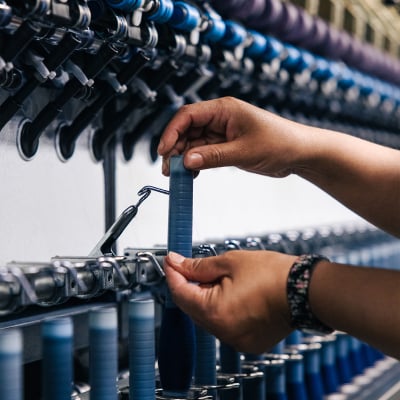
The fiber becomes yarn. Through controlled drawing and twisting, prepared fibers become a fine, regular yarn. Precision at this stage develops the strength and elasticity needed for subsequent processing. During winding, optical and capacitive systems inspect the yarn along its length. Close monitoring of both the material and the production environment supports consistent quality.
Strength through structure. Two or more yarns are combined and twisted together to develop the qualities required for each fabric. The choice of yarns and the way they are brought together influence strength, thickness, hand, and color. A carefully controlled process that adds a further level of definition to the material before weaving.
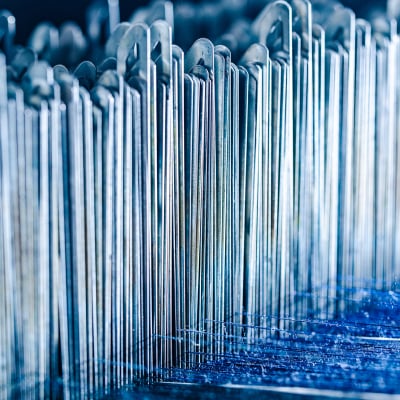
Precision before the loom. Warping arranges the yarns that will form the length of the fabric, preparing the warp for weaving. The threads are positioned according to the intended construction and design. Careful preparation establishes the order in which the yarns will enter the loom, providing the foundation for the next stage.
The construction takes shape. On the loom, warp threads interlace with the weft to create the intended construction. The relationship between yarn and weave defines the fabric’s pattern, density, and surface texture. It is here that separate threads become a fabric with its own distinctive structure.
An expert eye for every detail. Before finishing, the woven fabric is carefully examined by specialist personnel. Irregularities are identified and corrected through skilled, meticulous work. This inspection requires a close understanding of the yarn, the weave, and the intended result. Attention at this stage prepares each length of fabric for the treatments that will develop its final character.
The fabric reveals its character.
Finishing develops the hand, appearance, and stability of the woven fabric. Treatments using water, steam, and pressure are selected and calibrated according to each quality and its intended performance.
Every operation refines the relationship between surface and structure, bringing softness, texture, and drape into balance. The fabric acquires the qualities that distinguish it to the eye and to the touch.
Quality examined before delivery. Before leaving the mill, each fabric undergoes a final visual inspection. Specialist personnel assess the finished material against Reda’s quality standards, checking the result of the processes that have shaped it. A final, attentive examination confirms that the fabric is ready for the next stage of its journey
Research quality and innovation
Material knowledge in continuous development.
Research accompanies every stage of production. Internal laboratories test fibers, yarns, and fabrics, while dedicated development work explores new constructions, finishes, and applications.
This ongoing dialogue between testing and manufacturing deepens our understanding of the material, refining existing qualities and opening new possibilities for Merino wool.
Development also considers environmental performance, seeking improvements in both the product and the processes used to make it.
A responsible process
Care expressed through the way we make.
Care for the material extends to the resources used in its transformation. Monitoring consumption and assessing environmental impact across the supply chain help Reda identify opportunities to improve its processes.
A measured approach to production, where resource efficiency and informed decisions are part of the daily work behind every fabric.