

Outerwear.
Construction for the outermost layer.
Outerwear places particular emphasis on the relationship between material, volume, and intended use. Within Leisure, wool becomes the starting point for fabrics that give the outermost layer its own character, from the definition of a silhouette to the depth of a surface.
Research considers how different constructions can support the garment while preserving a refined appearance. Texture and hand contribute as much as shape to this balance, allowing designers to approach outerwear as an integral part of the wardrobe. Each quality offers a distinct response to the project, bringing composition and finishing into a considered balance between the character of the material and the form of the garment.
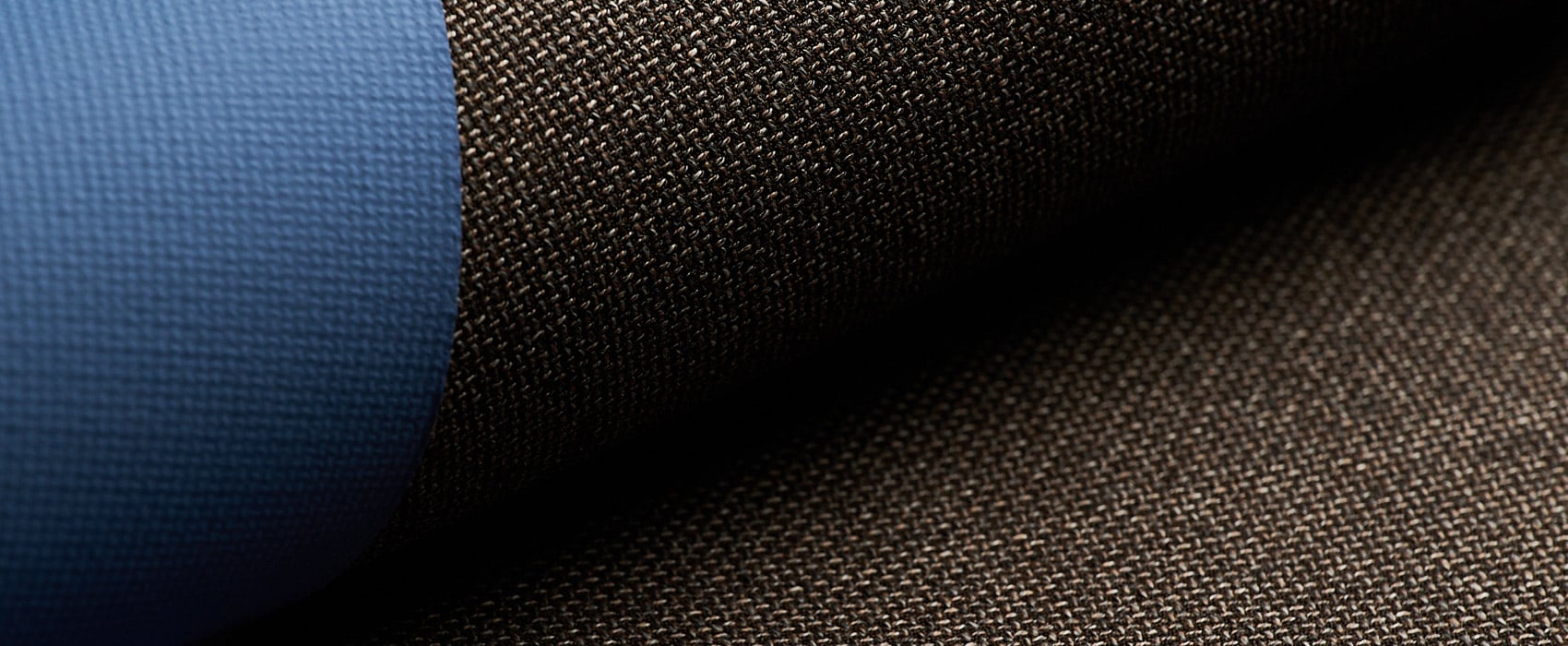
Breathability.
Fabrics developed to allow moisture vapour to move outwards, helping maintain comfort within the garment.
Water repellency - WR.
Water-repellent finishes help water form droplets and roll off the surface, reducing surface wetting.
Waterproof protection - WP.
Selected constructions use a waterproof barrier to resist water penetration, with performance defined for each fabric.
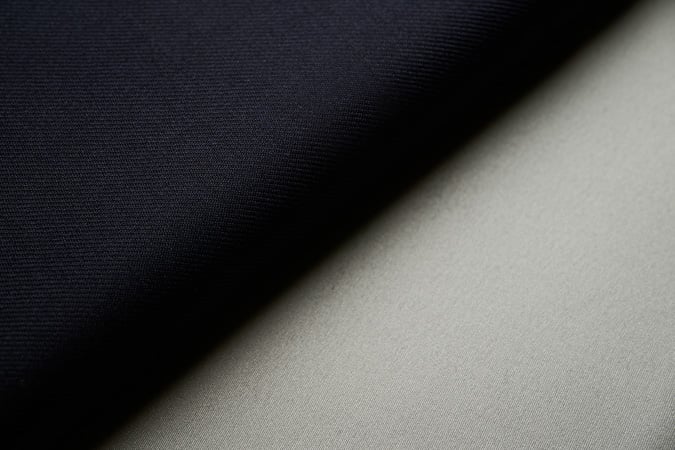
Membranes, designed into the fabric.
Laminated constructions combine the outer textile with a functional membrane. The membrane acts as a barrier to water while supporting moisture-vapour transfer, bringing protection and breathability into the same material system. Its selection and combination with the face fabric determine the balance of hand, flexibility and performance required for each outerwear application.