At the Source of Wool: Master Fibre Nobili Students Visit Reda Farms
At the Source of Wool: Master Fibre Nobili Students Visit Reda Farms
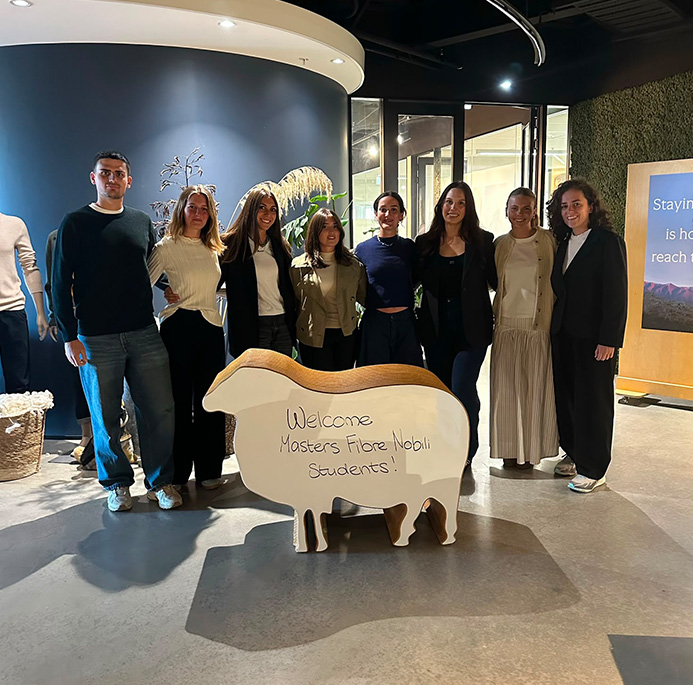
From fiber to fabric, understanding wool also means understanding where it comes from. That is why the students of the Master Fibre Nobili travelled to New Zealand to visit Reda’s farms. It was a hands-on experience that brought them closer to the origins of the raw material and gave us the opportunity to meet the people, animals and landscapes that are part of its story.
We retrace the journey through the eyes of those who experienced it first-hand.
A Thread Between Biella and New Zealand
During the master’s programme, we had already encountered wool in many of its different forms and stages of transformation. In New Zealand, we had the chance to follow it all the way back to its source. It was a journey to discover the places where Merino wool begins, long before it becomes yarn or fabric.
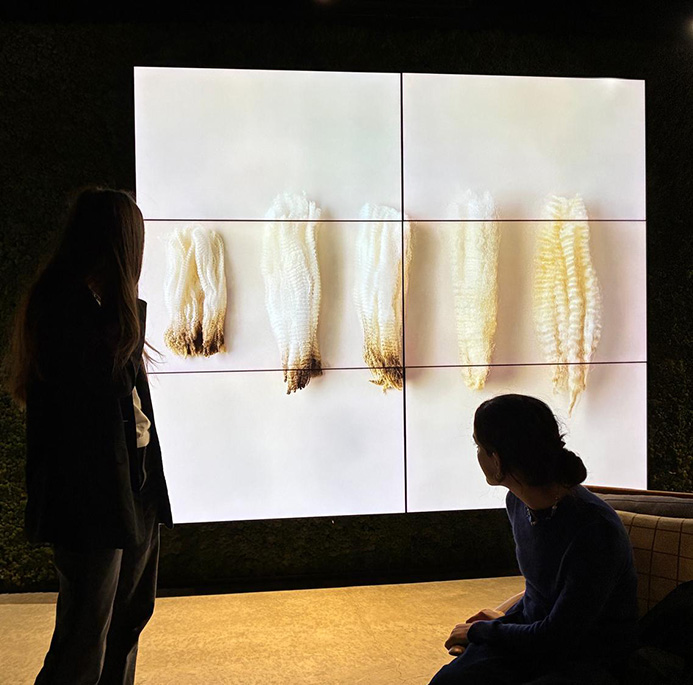
Our journey started in Christchurch, home to Zentera Wool Company. A Reda partner since 2009, the company acts as a link between New Zealand wool growers and the textile industry, accompanying the fibre through the first stages of the supply chain. Through programmes such as ZQ and ZQ+, increasingly rigorous standards are applied to fibre quality, animal welfare, traceability and responsible land management. It is a system that makes it possible to better understand the origin of the raw material and the environment in which it is produced.
Pastures as Far as the Eye Can See
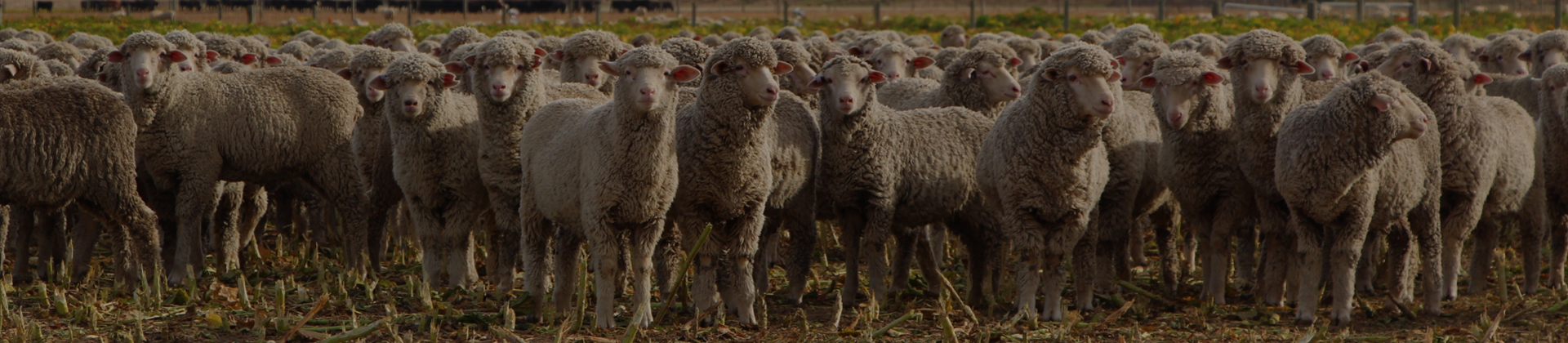
The journey then continued to Otamatapaio Station, where we had the opportunity to experience the everyday reality of life on a farm. Here, the pastures stretch from the valley floor all the way up to the highest ridgelines. Merino sheep live in a vast landscape where animal management is inevitably intertwined with land management.
In places like these, time is not dictated by the calendar alone. Weather conditions, the state of the land and the needs of the animals shape the rhythm of each day, requiring constant adaptability.
Shearing and the Role of Wool Classers
Watching Merino sheep being shorn was one of the most memorable moments of the experience. At Glenrock Station, the fast, coordinated movements of the shearers seemed to follow a choreography in which every gesture had a precise purpose.
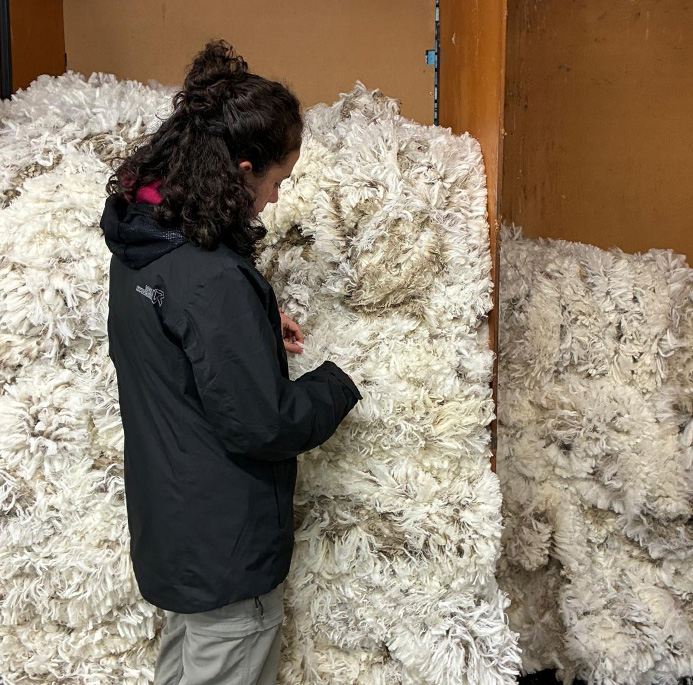
Once removed from the animal, the fleece is collected and goes through an initial selection process. This is where the wool classer comes in, playing a key role in the process. Through visual and tactile assessment, the wool classer evaluates the characteristics of the fibre and sorts the fleeces into consistent categories. It is a job that requires experience, sensitivity and an in-depth knowledge of wool.
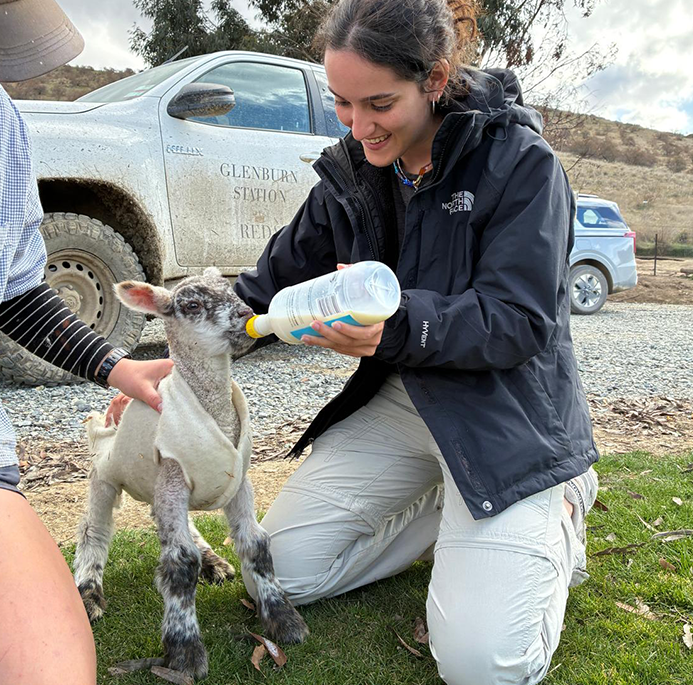
We also had the chance to take part in the daily work ourselves, helping to apply an antiparasitic treatment to the animals’ backs after shearing. It was a simple task, but one that allowed us to become more than just observers and experience farm life from even closer.
Before there is fabric, there are animals, landscapes and the expertise of the people who work on these farms every day. Visiting the places where it all begins made the material we study feel even more tangible and alive.
Experiencing this first stage of the supply chain first-hand gave a new sense of reality to many of the topics we had explored during the course and helped us understand even more clearly just how much work lies behind a fibre before it can become yarn, fabric and, eventually, a garment.